What Giving USA 2026 Told Us About This Work, And Why I'm Still Hopeful
Yesterday morning I sat in a room full of Tucson fundraisers at our AFP Southern Arizona chapter meeting and listened to Richard Tollefson of The Phoenix Philanthropy Group walk us through the just-released Giving USA 2026 report on 2025 giving. I’ve known Richard since our days working together at the University of Arizona. I respect him and the work he’s doing in the consulting firm he founded.
As you know, I've been in this work for a long time but you may not know how much I love data. Data tells a story. In regard to philanthropy, we’ve all seen numbers go up and down. Some of us have panicked but stay in the game because it’s valuable to us. Even after all those years, I still walk out of a room like that one with energy and a ton of notes!
With that said, I thought I would share a few takeaways.

Philanthropy crossed $600 billion in 2025
Americans gave more than $600 billion in 2025. That's a first, it's a 5.7% increase compared to 2024. Eight of the nine recipient sectors grew and four of the four sources of giving grew.
Think about that for second. In a year that some people were calling unpredictable, when federal funding was cut, consumer confidence was being questioned, and a budget bill that caused several clients to feel like it was a crisis moment. Americans still gave more than they ever have.
That is pretty significant.
To use a sports analogy, individuals are still the whole ball game
Individuals accounted for 64% of giving. When you add in bequests and family foundations you're at 84% of every philanthropic dollar in this country.
As Richard stated, many people guess that corporations are the biggest driver, but they aren't. Corporations gave about 7%.
If you are a non-profit your strategy should focus on individuals, and of course corporation, but make sure you have the right ROI.

Religion still leads the way
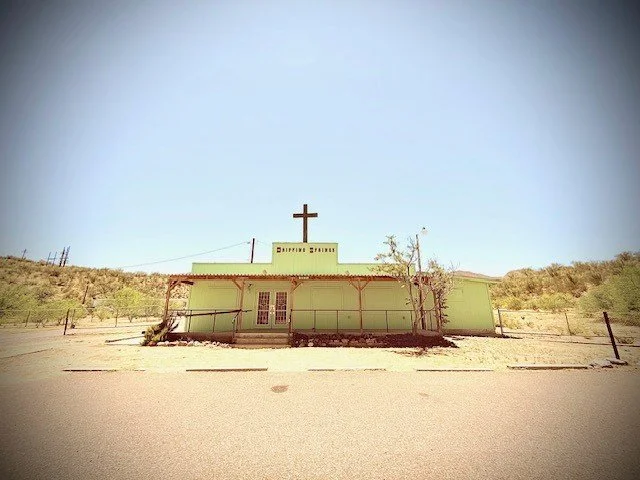
Religious organizations remain the largest single destination for philanthropic dollars in this country. They received $151.68 billion in 2025, which is 23% of all giving. There is a perception that that we should watch those dollars and track the data as people return to going to church. During COVID, churches offered service online and while people are returning some are still participating via the internet. That engagement may have potentially changed how people give. It’s a shift we should be watching. Keep in mind, historically, faith based organization are generally at the top of the list for support.
Sectors hitting all-time highs
Look who set new records in 2025: human services. education, arts, culture, humanities, health, environment and animals.
If you work in one of these areas and your numbers didn’t reflects this, you might want to look at why and try and understand what your data is telling you. Look deep, talk to your board and consider changing the course so the remainder of this year can be beneficial to your organization.
The Great Wealth Transfer just got bigger. Again
I feel like we have been talking about the “Great Wealth Transfer” for a while. According to Richard, the original estimate was about $40 trillion. Then $70 trillion. Then $100 trillion. And, the current estimate is $124 trillion. That’s a lot of money, and $18 trillion of that is expected to flow to charitable organizations. What’s crazy and interesting to reflect on, he said, that 81% of it will come from Baby Boomers. With people living longer and if the markets keep climbing, that could change this and potentially push it out further than anticipated.
I’ve shared this often but estate planning is a big factor here and it needs to be a part of your plan. I heard it again at this meeting. Blended gifts are important (a cash gift or pledge along with an estate gift). Create your strategy if you don’t have one and if you do have one evaluate it to ensure it’s working best for you. A friendly tip, take a class, read a book, and definitely ask questions.
Retention isn't a one-year game anymore
This one hit me. We've been measuring donor retention year after year for as long as I've been in this work. Richard made the case that the cycle now is more like 3-5 years and his logic made sense.
Donors aren't gone because they skipped a year and we should disqualify them. Keep communicating as you never know what caused them to make that decision. I you keep the connection, they still learn about your organization. Based on the talk today, measure retention across a longer window, and set the expectation with your leadership that ROI on your annual fund could be evaluated this way too.
Giving moves at the speed of trust
Richard said something in that session that I've been thinking about ever since. “Philanthropy moves at the speed of trust.” He named it as one of the most significant factors driving what we saw in the 2025 numbers.

He's right, and it's the thing beneath every other data point in that report. People don't invest in a mission because someone asked. They invest because they trust an organization to do what it says it will do. Organizations are mindful to honor their gift and their choices to give. To carry the work forward when nobody's watching and frankly, to answer the phone.
That's what we're actually building when we build a development program. Trust and Relationships.
“Philanthropy moves at the speed of trust.” I now have written that one on a sticky it’s on my wall next to my desk to remind me, it’s always about trust and relationships.
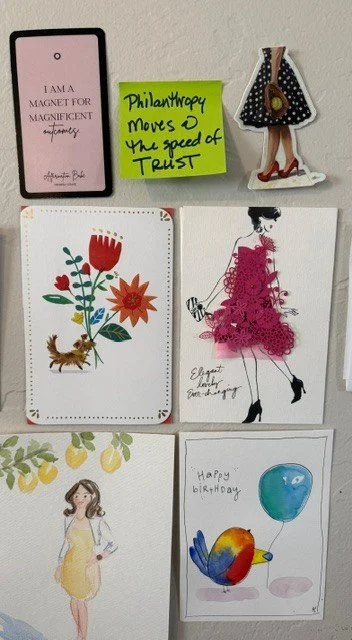
Richard gets the credit for the phrase and the framing, and if you are in this field, I hope you reflect on what it means in your work.
Why I'm still hopeful
I don't think 2026 is going to come down. Every one of my clients is doing real work of build relationships and tell their story and each is still finding donors ready to say yes.
The money's there and individuals want to invest in mission-driven work. Our job is to build the relationships and share the impact our donors care about, then steward it with the honesty, transparency, and care.
That's the work and it's always been the work. Nonetheless, after more than three decades and mornings like this one, I'm still grateful to be in it with all of you.
Thank you to Richard Tollefson of The Phoenix Philanthropy Group for the generous session, and to AFP Southern Arizona for continuing to bring us together in rooms like this.
Keep Doing Good Work
References
Giving USA Foundation. (2026). Giving USA 2026: The annual report on philanthropy for the year 2025. Researched and written by the Indiana University Lilly Family School of Philanthropy. https://givingusa.org.
Tollefson, R. (2026, July 10). Giving USA 2026: Findings and implications for fundraising [Conference session]. Association of Fundraising Professionals Southern Arizona Chapter Meeting, Tucson, AZ.